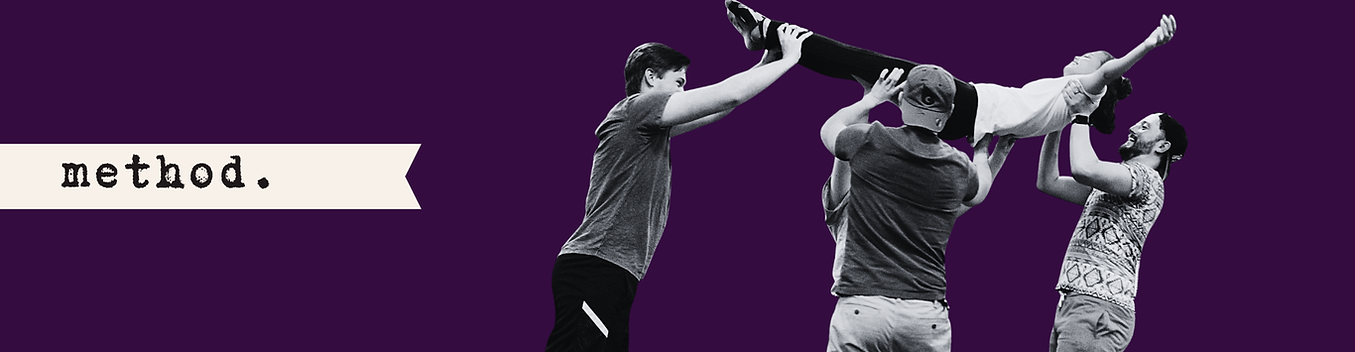
the method
WHERE THEATRE MEETS INQUIRY
The emBODY Performance Method is a body culture-centered performance pedagogy and physical theatre training framework created by Corinne M. Mason, developed in collaboration with artists willing to
question inherited ways of making work.
This method treats the body as a site of knowledge, history, and power. It pulls from feminist theory, engaged pedagogy, and embodied practice to examine how physiology, psychology, politics, and culture
shape performers and the stories they tell.
In the room, the work stays practical. Movement-based training and ensemble creation build somatic awareness, interrupt limiting patterns, and train three performance capacities: freedom, presence, and authenticity. These capacities function as skills, not slogans. Artists practice them, test them under pressure, and refine them through rehearsal and performance.
The emBODY Performance Method also anchors emBODY project Theatre. It drives the research and invention of Lab, the shaping and staging work of Ensemble, and the ongoing training of Studio, keeping freedom, presence, and authenticity at the center of process, performance, and community practice.
.png)
Freedom is the capacity to move beyond inherited scripts about the body. In the emBODY Performance Method, freedom is not “doing whatever you want.” It is gaining enough awareness of body culture, habit, and constraint that you can choose how to move, respond, and create.
Presence is the practice of sustained, embodied attention. Presence in this work means the performer is available to sensation, partner, space, and story at the same time. It is a cultivated state, not a mystical accident.
Authenticity is the practice of creating from your own embodied history rather than a borrowed template. In the emBODY Performance Method, authenticity does not mean confession or self-exposure. It means the performer's lived experience, identity, and history are treated as legitimate material for the work, not something to suppress in service of technique or a "right way" to perform. It is consent-forward truth: you choose what of yourself enters the room, and that choice is honored as artistry.
how it works
FREEDOM. PRESENCE. AUTHENTICITY.
In practice, the emBODY Performance Method moves through a simple cycle that can stretch across a single workshop or an entire rehearsal process:
Arrive
We begin by arriving in the room as we are. Grounding, breath, and short check-ins make space for bodies, histories, and present-tense realities before any “work” begins.
Warm the instrument
We use movement-based training to wake up spine, breath, focus, and connection. The goal is not virtuosity, but awareness: noticing habits, tensions, and possibilities in the body.
Work through scores
Guided prompts and structured tasks (scores) invite performers to explore story, identity, and body culture in action. These scores generate text, movement, image, and relationship that can later be shaped into performance.
Shape and compose
Material that emerges from scores is selected, arranged, and refined. The method offers ways to move between improvisation and composition so work stays alive without becoming chaotic.
Reflect and integrate
Reflection is part of the practice, not an add-on. Performers and facilitators name what shifted in the body, what questions emerged, and how the work relates to larger systems and stories. These reflections feed the next round of training, creation, or research.
Ethics & commitments in the emBODY Performance Method
Because the emBODY Performance Method centers body culture, it carries explicit commitments about how we work together:
-
Consent and boundaries
Physical and emotional work is always invitational. Performers are encouraged to set, adjust, and articulate boundaries, and facilitators design processes that respect those limits. -
Attention to body culture and power
The method names how race, gender, class, disability, size, and other forces shape bodies in rehearsal and performance. We treat these forces as part of the material, not something to ignore. -
Care and sustainability
The work can be intense, but it is not designed to be extractive. Pacing, check-ins, and closure practices help keep artists from being used up in the name of “truth.” -
Shared inquiry
Performers are treated as co-researchers, not raw material. Their questions, resistances, and insights guide how the method continues to evolve.
These commitments shape how the tools are used, who they serve, and what kinds of rooms the method is willing to be in.
The specific exercises, scores, and tools vary by project and context, but this cycle of arrival, training, exploration, shaping, and reflection stays at the heart of the method.
Performers
Performers, movers, and devising artists
Actors, dancers, and interdisciplinary performers who want to build work from the body’s truth, not just from text or technique. The method supports artists who are curious about how their lived experience, identity, and body history shape what they create.
Performers use the emBODY Performance Method to build roles, scores, and performances from the body’s truth instead of from habit or imitation. Training focuses on presence, choice, and embodied storytelling, giving actors, movers, and devising artists concrete tools to connect lived experience, body culture, and craft.
Facilitators
Directors, choreographers, and facilitators
Leaders of rooms who want clear tools for guiding ensemble process, consent-based practice, and embodied storytelling. The method offers scores, structures, and reflection tools that help hold both rigor and care in rehearsal.
Directors, choreographers, and facilitators who want to integrate the emBODY Performance Method into their own rehearsal rooms are encouraged to begin through Studio’s teacher training and facilitator-focused workshops. These sessions introduce the core tools, room practices, and ethical frame of the method so that leaders can adapt it responsibly to their own ensembles and projects.
Young Artists
Students and emerging artistsYoung and early-career artists who are learning to trust their bodies as sites of knowledge. The method gives them accessible training in presence, choice, and ensemble work while naming the forces that shape how they move through the world.Emerging artists and students meet the method through Studio classes, Labs, and school partnerships. The work helps them trust their bodies as sites of knowledge, name the forces that shape how they move through the world, and practice freedom, presence, and authenticity in an accessible, scaffolded way.
Community
Distilled repetitive content into cohesive paragraphEducators, institutions, and community partners can bring the emBODY method into classrooms, residencies, and collaborative projects. Sessions are tailored to the context and the community, connecting embodied practice with curriculum, storytelling, or organizational culture while keeping body culture, lived experience, and care at the center.
origins


The emBODY Performance Method began with a question in 2017 that would not let Corinne go:
What if rehearsal started from the body’s truth
instead of from the script?
She gathered a small group of artists and walked into the studio with that question.
No guarantee. No fixed technique. Just a sense that the body knew more than it was being asked.
Session by session, patterns emerged.
Certain scores kept opening doors.
Certain habits kept showing up in the body: tension, apology, collapse, defense.
The work stopped feeling like a one-off experiment
and started to move like a method trying to name itself.
-
In 2025, the question was put under a brighter light
through emBODY project, Corinne’s MFA thesis production and research.
The ensemble built a full performance using the method,
while co-researcher Brendan Cawley helped track what was happening underneath: how this way of working supported body reclamation for individual artists in the room.
What began as intuition became data.
Stories, reflections, and rehearsal notes began to confirm
that the tools were doing real work on and with the body.
-
After the thesis closed, the next task was translation.
Corinne began to transcribe the practice into a clear, repeatable pedagogy:
scores, room practices, and training sequences
that could live in classrooms, rehearsal halls, and community spaces far beyond the original ensemble.
Brendan Cawley remains with emBODY as Director of Research, supporting the translation process and helping shape the next phase of the method through ongoing inquiry, documentation, and publication.
The emBODY Performance Method now moves between research, training, and performance, but it still carries the same seed from 2017:
Start with the body’s truth,
and build the theatre from there.
The method exists because of the many artists, ensembles, and students who trusted these questions
with their bodies and stories; it is held in Corinne’s name, but it was built in community.

Lauren
“It was really beautiful and rewarding to be in a space that actually acknowledges that our bodies are our instruments. Getting to express my own story through movement was cathartic and healing. This process helped me give myself something I don’t often offer myself: grace.”

Natasha
“I learned new ways my body can move and combine my feelings with my movements, instead of zoning out trying to make it perfect. This workshop pushed me outside my comfort zone, and I walked away more secure being physical and comfortable in my own skin. I did not feel like my body was ‘too big’ or taking too much space.”

John
“My body doesn’t have to look or function like someone else’s to contribute to the creation of movement. These exercises showed me that I can perform earnestly and honestly in a repeatable way without exhausting self-sacrifice of body and mind. The movement supports the story while still protecting my health and well being.”